E-Bike Battery Safety & Charging: A Practical Guide
Ad / affiliate disclosure: This article contains affiliate links. If you buy through them we may earn a commission at no extra cost to you. It does not change our picks. More.
Victorian fire agencies now attend almost one lithium-ion battery fire a day, and Energy Safe's 2025 data puts about half of them in homes and apartments — mostly during charging.2 The good news: the habits that prevent most fires are simple.
Charging habits
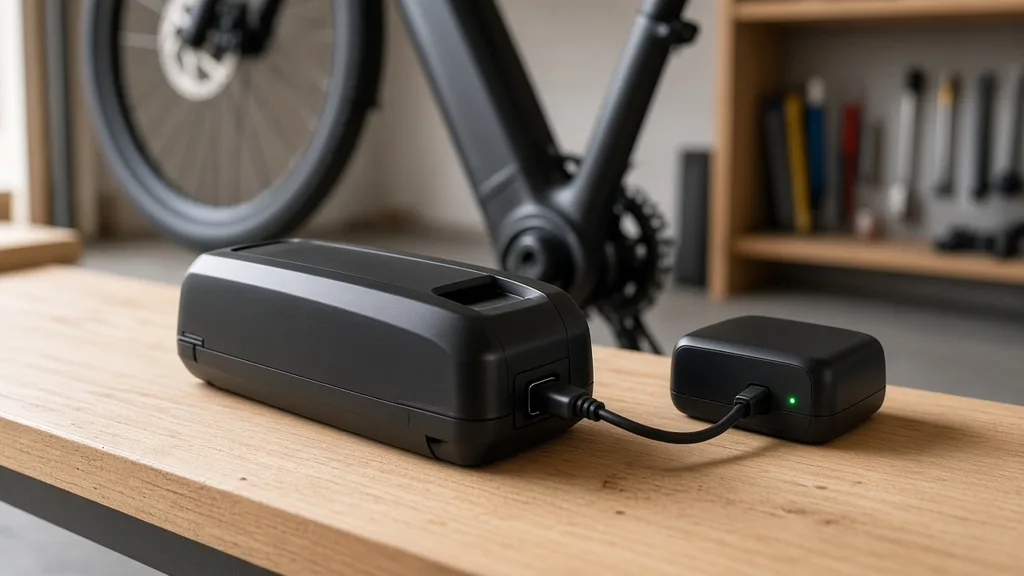
- Use the charger supplied or approved by the manufacturer. One in five e-ride owners use a generic or mismatched charger.2
- Check the charger has the Regulatory Compliance Mark (RCM).1,3
- Charge on a hard, non-flammable surface (concrete, tiles, steel) — never on a bed, couch or carpet.1
- Don't charge in a bedroom or near your exit, and don't charge overnight or unattended.1,2
- Unplug once full. Let the battery cool after a ride before charging.1
- FRV recommends a smoke alarm where you charge.3
Storage
Keep batteries cool, dry and out of direct sun — never in a hot parked car.1 Store away from living spaces and escape routes where possible.3
Warning signs — stop using it
Swelling, leaking, overheating, strong smells, colour change, or popping/hissing sounds. If it's safe, move it away from anything flammable (outside); if it catches fire, get out and call 000.1,3
Buying and repairs
Buy from known suppliers; don't import batteries directly from overseas or repurpose batteries from other products.1 Leave repairs and battery swaps to qualified professionals.3 DIY conversions carry higher fire risk, which is why converted e-bikes are banned from trains.4
Disposal
Never put lithium batteries in household bins. Use a battery drop-off (FRV points to B-cycle).3
Sources
- Energy Safe Victoria — Lithium-ion battery safety
- Energy Safe Victoria — “It won’t happen to me” mindset fuels battery fires
- Fire Rescue Victoria — Battery safety for consumers
- Transport Victoria — Electric bikes